
The Hidden Story Behind Japanese Eggplants: An Edo-Period Botanical Mystery for Designers
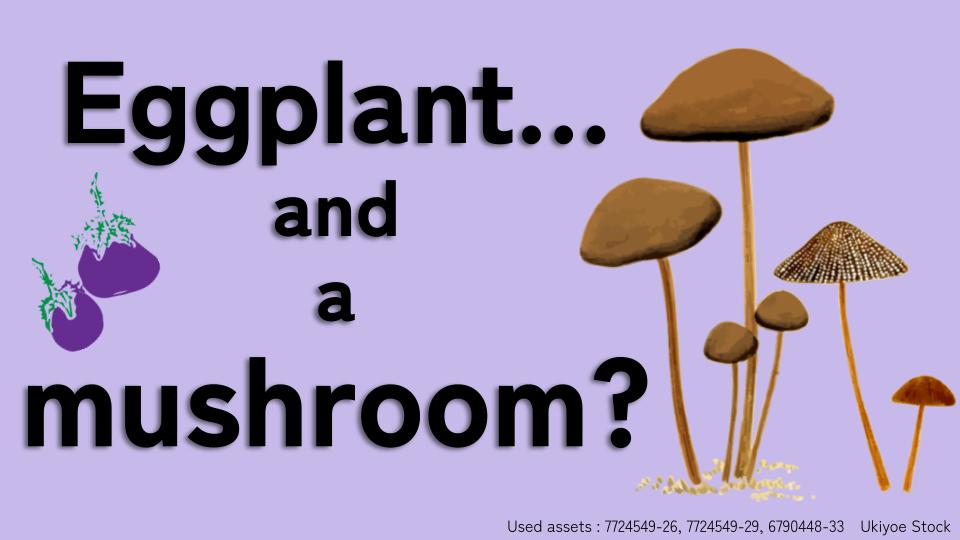
When designers think of summer vegetables today, tomatoes often come to mind.
But in Edo‑period Japan (1603–1868), tomatoes were still considered ornamental plants and rarely eaten.
Eggplants, on the other hand, were one of the true stars of the Japanese summer table.
But here’s the twist:
Historical mushroom encyclopedias show that a particular mushroom often appeared at the base of eggplant plants.
And that mushroom has a surprising name — “bafunkin,” literally “horse‑manure mushroom.”
Let’s explore why this happened, and how this unexpected detail from Japanese agricultural history can add depth and storytelling to your design work.
Eggplants: A Summer Icon Long Before Tomatoes Took Over
In modern cuisine, tomatoes dominate summer recipes worldwide.
But in Edo‑period Japan, tomatoes were still exotic and not part of everyday cooking.
Eggplants, however, were:
- easy to grow in Japan’s humid summers
- versatile in cooking
- culturally symbolic (from the proverb “Ichi-Fuji, Ni-Taka, San-Nasubi" — the three luckiest things to see in a New Year’s dream)
- a major commercial crop around Edo (modern Tokyo)
Farmers invested great effort into cultivating strong, healthy eggplants — especially the prized first eggplants of the season, which sold for premium prices.
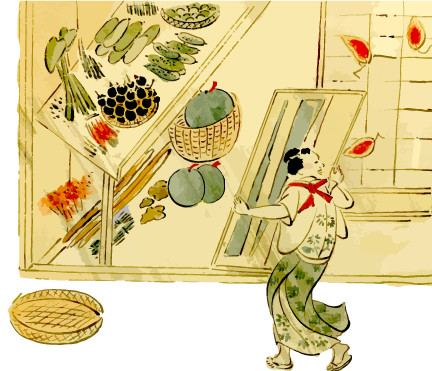

Why a “Horse‑Manure Mushroom” Grew Under Eggplants
Historical mushroom compendiums such as Baien Kinpu include descriptions of mushrooms commonly found growing at the base of eggplant plants.
Below is the relevant section from the original Edo‑period source.
Original illustration from Baien Kinpu
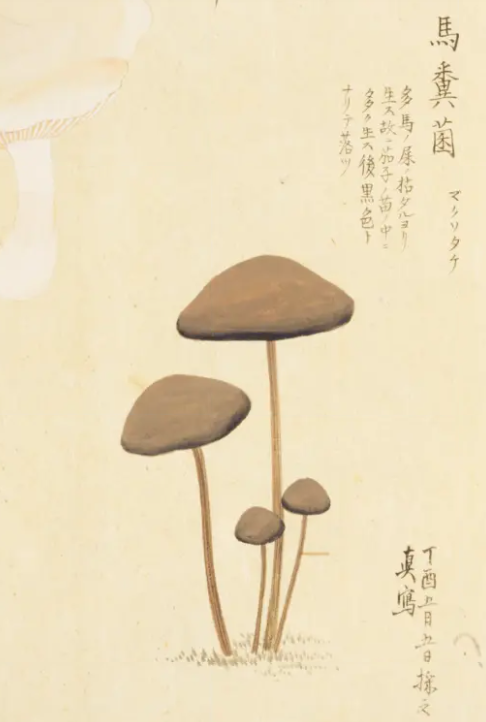
Transcription of the original Japanese text
馬糞菌(マクソタケ)
多馬ノ屎ノ枯タルヨリ 生ズ故ニ茄子ノ苗ノ中ニ 多ク生ズ後黒色ト ナリテ落ツ
Makusotake (Bafunkin)
Ooku uma no kuso no karetaru yori shouzu yue ni nasu no nae no naka ni ooku shouzu nochi kokushoku to narite otsu
Modern English translation
Bafunkin (Makusotake)
This mushroom often appears in places where horse manure has dried and aged. For this reason, it can frequently be found in fields where eggplant seedlings have been planted. When it first emerges, the mushroom is white, but over time it turns black and eventually deliquesces (melts into a black liquid).
At first glance, the name “horse‑manure mushroom” might sound unsanitary.
But the real explanation reveals a lot about Edo‑period agriculture.
No, horses were not urinating directly on eggplants.
Instead:
- Edo farmers used rich organic compost to grow high‑value vegetables
- This compost often included horse manure and urine collected from stables
- As the compost decomposed, it created ideal conditions for certain mushrooms
- One of those mushrooms was the bafunkin
So the presence of this mushroom wasn’t a sign of neglect — it was evidence of intensive, careful cultivation.
Why This Matters for Designers
For designers working with Japanese‑inspired themes, food motifs, or botanical illustrations,
knowing the cultural and historical background of a motif dramatically changes how you use it.
Eggplants aren’t just vegetables — they’re:
- symbols of summer
- part of Japan’s visual and cultural heritage
- tied to Edo‑period agricultural practices
- connected to unexpected natural companions like the bafunkin mushroom
Using motifs with real historical context adds:
- authenticity
- storytelling power
- a sense of place and time
- emotional depth
This is especially valuable for:
- packaging design
- editorial illustration
- educational materials
- Japanese‑themed branding
- botanical or ukiyo‑e‑inspired artwork
Bringing This Motif Into Your Own Work
The mushroom–eggplant connection is a perfect example of how unexpected historical details can enrich modern design.
If you’re creating:
- summer‑themed graphics
- Japanese food illustrations
- Edo‑period inspired visuals
- botanical collections
…adding a small mushroom near an eggplant can become a subtle nod to history —
a detail that gives your work depth and authenticity.
About This Material
The mushroom featured in this article, bafunkin, is available just like our other materials: fully licensed for commercial use, no credit required, and provided in high‑resolution transparent PNG and vector formats.
By combining it with eggplant or other summer‑vegetable materials, you can create a unique visual atmosphere that reflects the agricultural culture of Edo‑period Japan.
We also offer more than 150 other mushroom materials, with new items being released gradually through mid‑May, so feel free to explore and find your favorite one.


Source
Baien Kinpu (梅園菌譜), Edo‑period illustrated mushroom compendium
National Diet Library Digital Collection