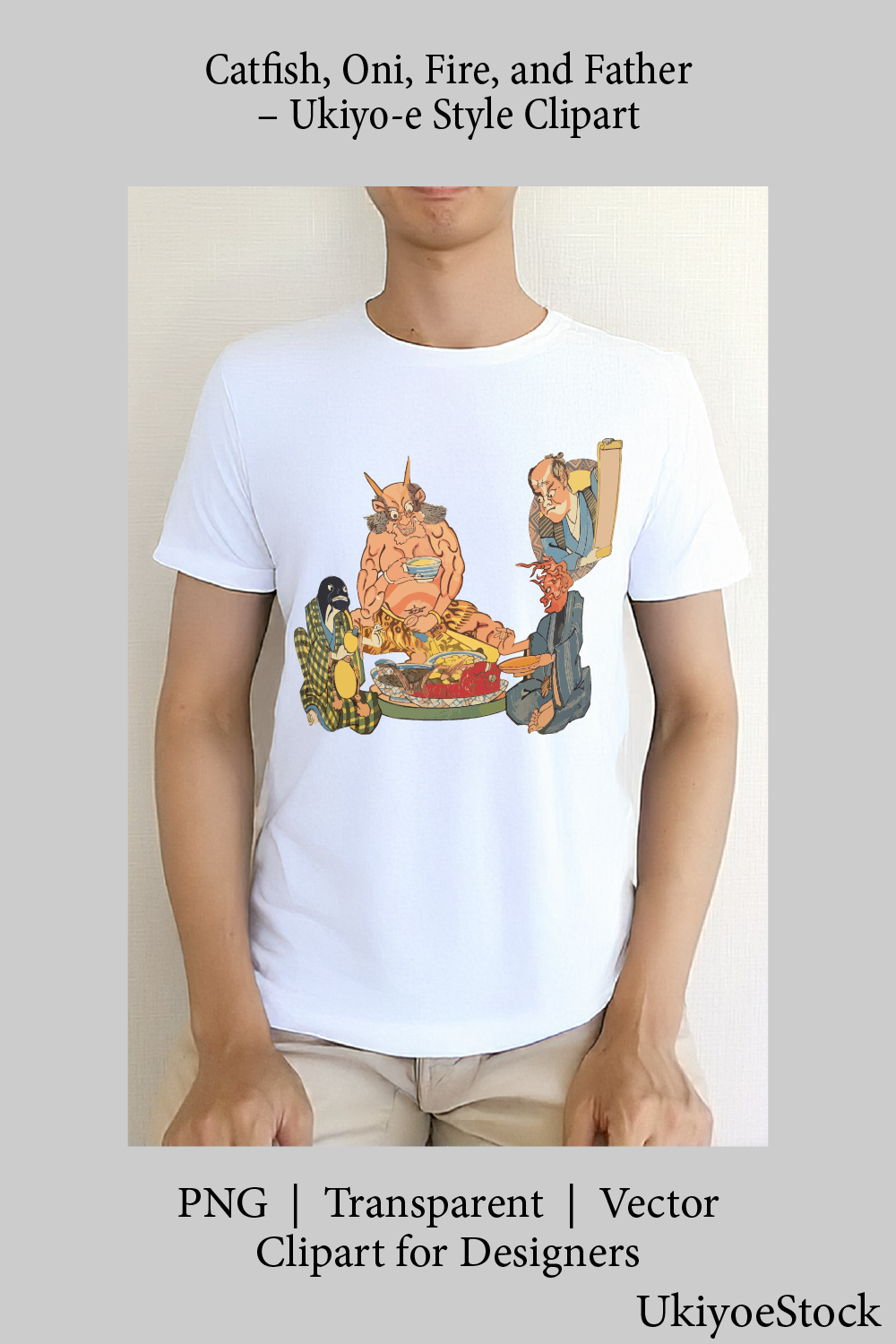
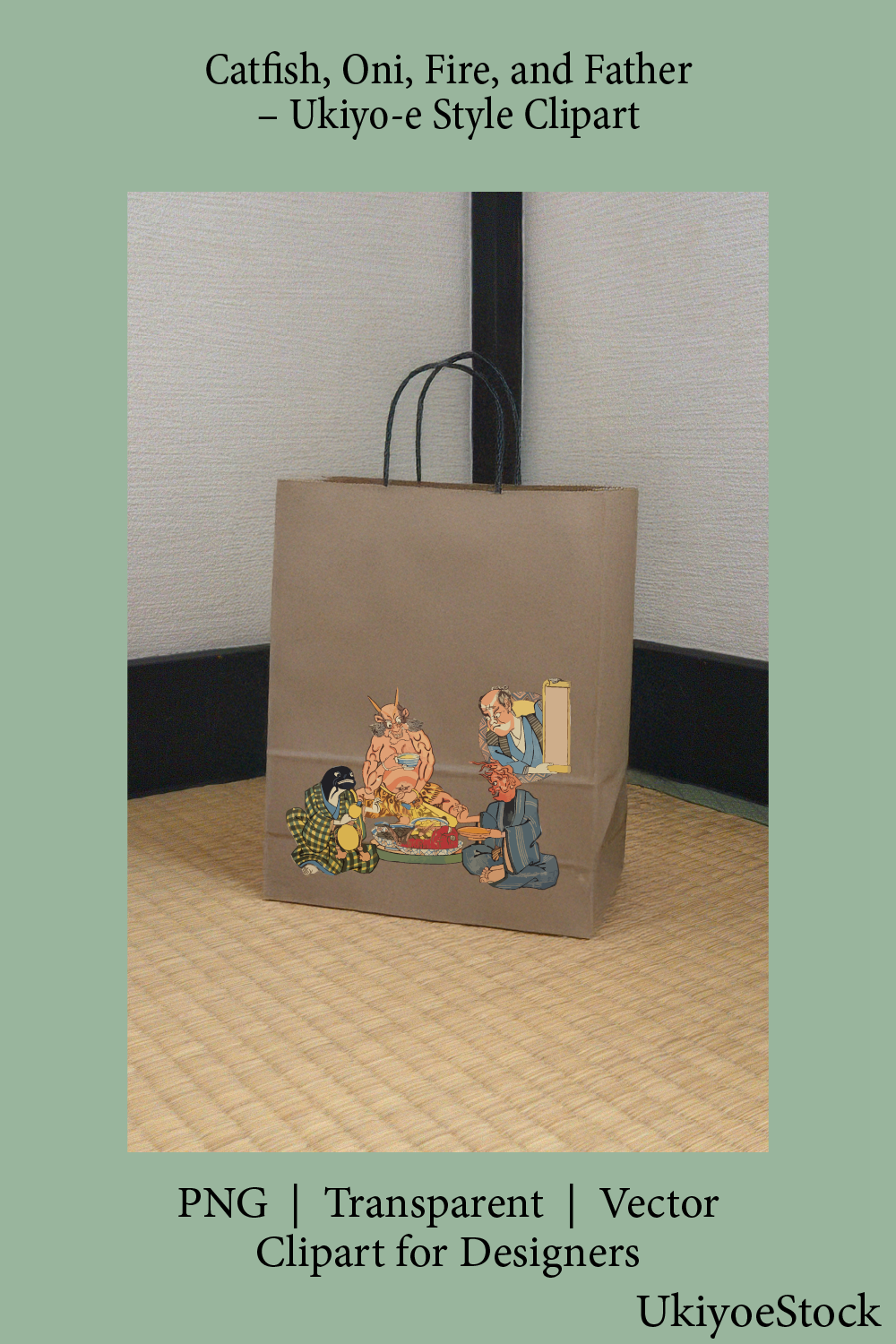
Character Design from Japanese Proverbs: Visualizing “Earthquake, Thunder, Fire, Father”
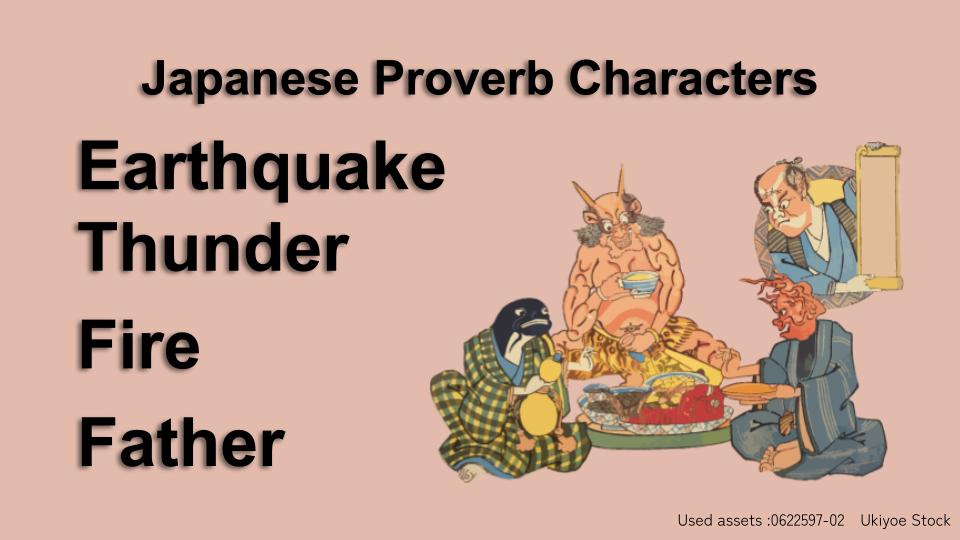
Japanese proverbs often reflect deep cultural values, fears, and humor. One of the most iconic is “Earthquake, Thunder, Fire, Father”—a phrase that lists the four things Edo-period people feared most. This proverb has inspired countless interpretations, but few are as visually engaging as this ukiyo-e style illustration, where each element is personified as a character sharing a meal.
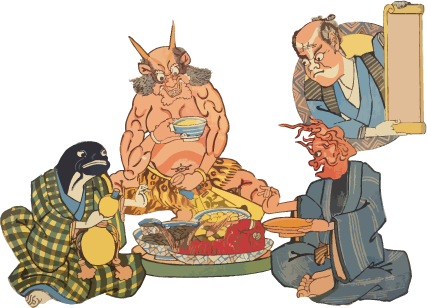
In this artwork, we see a cheerful gathering:
- A giant catfish representing earthquakes
- A thunder god oni beating drums
- A flaming figure symbolizing fire
All seated around a platter of food, enjoying sake and conversation. But above them, a stern man watches silently—representing “father,” not as comic relief, but as a figure of quiet authority.
Earthquake: The Catfish Beneath the Earth
In Japanese folklore, earthquakes were believed to be caused by a massive catfish called Ōnamazu, who lived underground. When it moved, the earth shook. This belief became widespread after the Ansei Great Earthquake of 1855, and catfish imagery appeared in satirical prints known as namazu-e. In this illustration, the catfish is anthropomorphized—no longer terrifying, but part of a convivial scene.
Thunder: The Oni and the Stolen Belly Button
Thunder was imagined as the work of a drum-beating oni riding clouds. Known as kaminari-sama, this thunder god was also part of a popular warning told to children:
“Hide your belly button or the thunder god will take it.”
This playful threat had practical roots—encouraging children to bend forward during storms or keep their stomachs covered while sleeping. In this artwork, the thunder oni appears relaxed, enjoying food and drink, far from his usual fearsome role.
Fire: Familiar Danger in Edo Japan
Fire was a constant threat in Edo, where buildings were made of wood and paper. Fires spread quickly, but residents were remarkably resilient—often beginning reconstruction the same day. The flame character here is lively and expressive, reflecting both the danger and the everyday familiarity of fire in urban life.
Father: The Silent Authority Watching Over All
The final element of the proverb, “father,” is portrayed not as comic relief but as a commanding presence. He peers down from above, holding a scroll, his gaze firm and unyielding. In Edo society, the father figure represented discipline, control, and social order. His presence in this scene adds tension—reminding viewers that even when fear is personified playfully, it remains potent.
Design Insights: Why This Illustration Resonates
This artwork transforms a cultural proverb into a vivid character tableau. For designers, it offers:
- A unique blend of folklore and humor
- Strong silhouettes and expressive poses
- Cultural depth ideal for editorial, apparel, or ZINE projects
- A rare example of proverb-based character design
Whether used in print or digital media, this illustration invites viewers to explore Japanese culture through visual storytelling.