
Japanese Food Clipart for Designers: Fish & Seafood
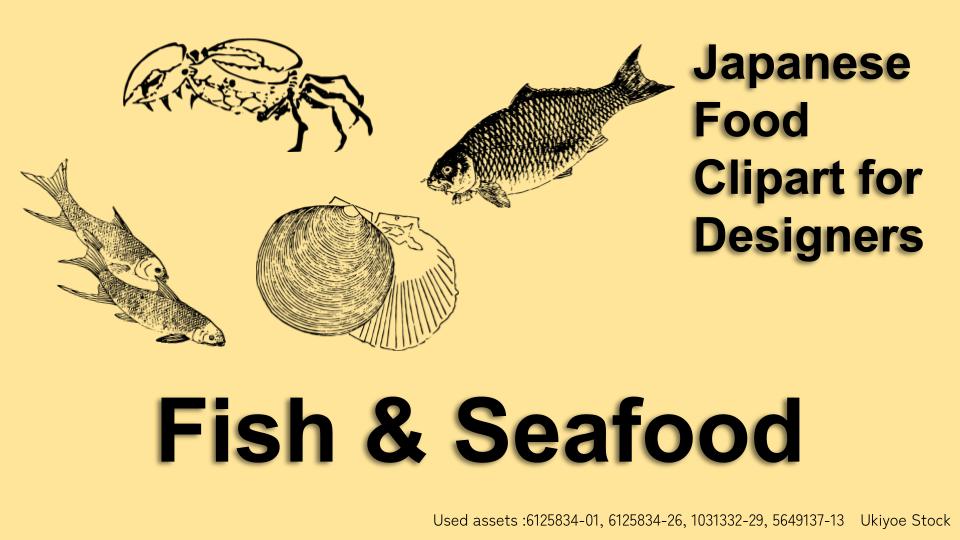
Japanese fish and seafood illustrations carry a quiet elegance that blends beautifully with modern design. Their clean lines, organic shapes, and subtle monochrome shading make them ideal for packaging, editorial layouts, ZINE projects, and branding that seeks a refined cultural touch. For designers looking to incorporate authentic Japanese aesthetics, Edo‑era–inspired artwork offers both visual clarity and historical depth.
Cultural Background: Why Marine Life Matters in Japan
Japan’s long history as an island nation has shaped a deep cultural connection with the sea. Fish and seafood were not only essential foods but also everyday symbols of life, trade, and regional identity. Even today, dishes like sushi reflect how closely marine life has been woven into daily living. This cultural familiarity gives fish and seafood motifs a natural resonance in contemporary design.
Why Fish & Seafood Work Well in Design
Fish and seafood motifs have appeared in Japanese visual culture for centuries. From traditional woodblock prints to natural‑history illustrations, artists captured marine life with remarkable accuracy and sensitivity.
For modern creators, these illustrations offer several advantages:
- Clear silhouettes that reproduce well in monochrome
- Organic movement that adds rhythm to layouts
- Cultural relevance for audiences interested in Japanese cuisine or coastal regions
- Versatility across packaging, posters, menus, and merchandise
Because many of these drawings were originally created for educational or encyclopedic purposes, they retain a scientific precision that aligns naturally with minimalist design.
Recommended Uses for Designers
Japanese fish and seafood clipart can elevate a wide range of creative projects:
- Food packaging for dried fish, seaweed, or regional specialties
- Restaurant branding for sushi bars, seafood markets, or izakaya menus
- Travel brochures introducing coastal towns or fishing villages
- ZINE layouts focused on natural history or culinary culture
- Merchandise such as T‑shirts, tote bags, and stationery
Monochrome line art is especially effective for limited‑color printing methods like letterpress, risograph, or black‑and‑white production.
Types of Fish & Seafood Clipart Available
Designers can choose from a wide variety of motifs, each with its own character:
- Fish: sea bream, carp, mackerel, sardines
- Shellfish: clams, oysters, scallops
- Crustaceans: shrimp, crabs
- Marine life: octopus, squid
These illustrations are based on Edo‑era natural‑history books, giving them a distinctive balance of realism and artistic charm.




Why Monochrome Works Especially Well
Monochrome Japanese clipart has a timeless quality. Without color, the viewer’s attention shifts to line quality, texture, and form. This makes the artwork:
- Highly adaptable to any color palette
- Easy to integrate into minimalist layouts
- Suitable for both digital and print media
- Ideal for designers who prefer clean, understated visuals
For creators working with limited‑color printing, monochrome is both practical and aesthetically strong.
Conclusion
Japanese fish and seafood clipart offers designers a unique blend of cultural authenticity, visual clarity, and historical richness. Whether you’re creating packaging, editorial layouts, or ZINE projects, these illustrations provide a refined and versatile foundation for modern design. If you’re looking to add a subtle Japanese touch to your next project, fish and seafood motifs are a beautiful place to begin.