
Three Traditional Edo-era Craftsmen: Woodturner, Buddhist Sculptor, and Fan Folder
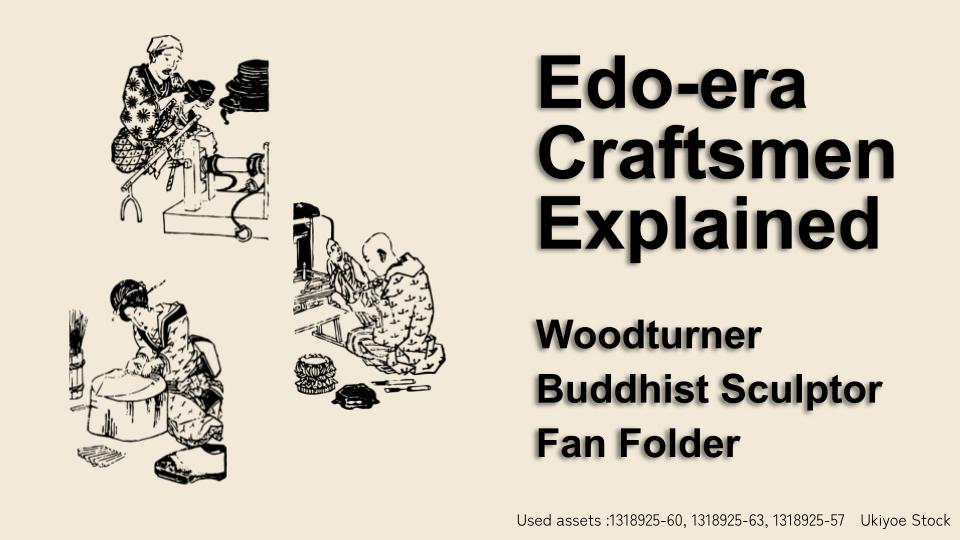
The Edo period (1603–1868) was full of skilled craftspeople who shaped everyday life with their hands and tools. Their work blended practicality with beauty, and many of their techniques still inspire modern design. In this article, we take a closer look at three traditional professions: the woodturner, the Buddhist sculptor, and the fan folder.
1. Woodturner (Hikimono-shi)
Woodturners shaped wooden objects using a lathe, creating bowls, trays, toys, and decorative pieces. Their craft relied on precision and balance, carving smooth and symmetrical forms from spinning wood. Popular materials included zelkova and paulownia, valued for their light weight and beautiful grain.

2. Buddhist Sculptor (Busshi)
Buddhist sculptors carved statues of Buddha and other sacred figures. Their work required both technical skill and a deep sense of spirituality. Each statue was created with care and symbolic meaning, often commissioned by temples or private patrons. These sculptures were meant to inspire and offer a sense of connection to something greater.

3. Fan Folder (Ogi-orishi-shoku)
Fan folders crafted folding fans by attaching paper or silk to wooden ribs. The process demanded steady hands and an eye for detail. Fans served many roles—cooling tools, fashion accessories, ceremonial items, and even props in kabuki theater. Many fan folders collaborated with painters and calligraphers to create elegant, functional works of art.

Conclusion
These Edo-era craftsmen brought creativity and meaning to everyday objects. Their legacy continues to influence traditional crafts and modern design, offering a glimpse into Japan’s rich cultural heritage.